



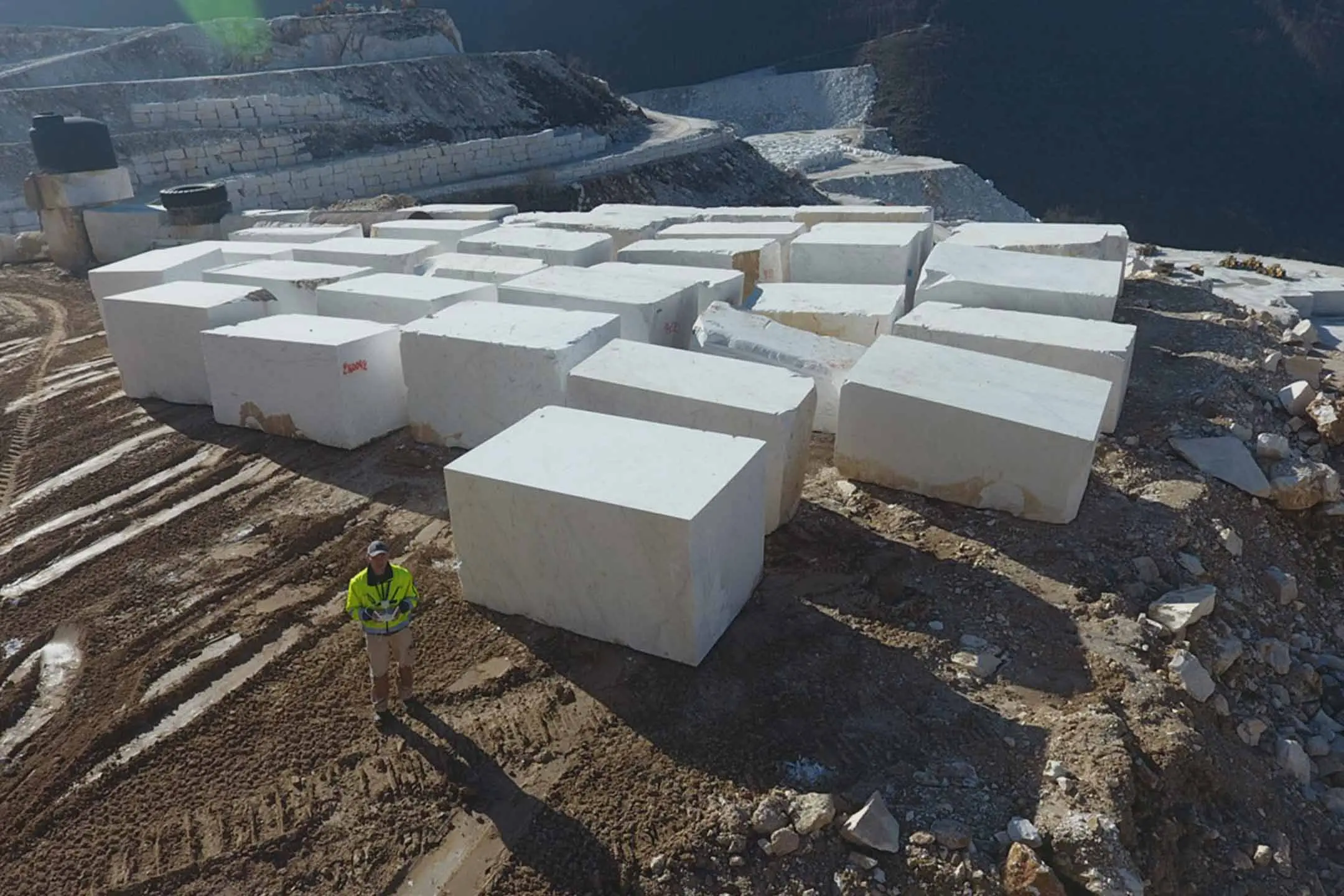
Behind the Scenes: Marble Quarrying Step by Step
Marble quarrying is a complex and highly demanding process that combines geological expertise, modern technology, and human experience. Behind every natural marble slab used in an architectural or construction project lies a carefully coordinated chain of operations that begins long before the material takes its final form. Understanding how marble is quarried allows for a deeper appreciation of both its value and the complexity of the production process.
1. Geological research and deposit evaluation
The process begins with an extensive geological study of the area. Specialized geologists analyze the stone composition, the structure of the deposit, and the continuity of the marble veins to determine whether the material meets the required quality and commercial standards. At this stage, critical characteristics such as color, uniformity, natural fissures, and suitability for specific applications are carefully assessed. Proper quarry mapping is essential to ensuring both efficiency and long-term sustainability of the extraction process.
2. Quarry planning and environmental management
Before any extraction work begins, a detailed quarrying plan is developed. This plan defines the cutting sequence, bench formation, and safety measures. At the same time, environmental management practices are implemented to minimize the operational footprint. Modern marble quarrying is not based on uncontrolled intervention, but on the targeted and responsible utilization of natural resources with respect for the surrounding landscape.
3. Marble cutting at the quarry
Extraction is carried out using specialized equipment, such as diamond wire cutting systems, which allow for precise and controlled separation of marble blocks. Unlike older methods, modern technology significantly reduces material waste and preserves the integrity of the stone. Large blocks are extracted gradually, ensuring that the marble’s natural structure and aesthetic quality remain intact.
4. Block shaping and transportation
Once extracted, the marble blocks are shaped to the required dimensions to ensure safe transportation. This stage demands a high level of precision and experience, as the weight and volume of the blocks make any error particularly costly. The blocks are then transported either to processing facilities or directly to ports, depending on their final destination and project requirements.
5. Quality control and material selection
Quality control is an integral part of the marble quarrying process. Each block is evaluated for its structure, color consistency, and mechanical properties. This ensures that only suitable material proceeds to the next stage of processing. For international markets, this rigorous inspection process is a key factor in maintaining reliability and consistency.
6. From the quarry to the final project
Quarrying is only the beginning of the marble’s journey. Once it leaves the quarry, the marble will be cut into slabs, finished according to specifications, and ultimately integrated into architectural and construction projects around the world. While each stage adds value, the quality that defines the final result originates at the quarry itself.
Proper marble quarrying requires expertise, experience, and long-term planning. The commitment to quality and deep knowledge of natural stone that defines Dermitzakis Bros S.A. are reflected at every stage of the process—from the deposit to the final product—ensuring materials that meet the highest standards of the international market.
At the privately owned ARETI quarry, located in the mountainous area of Pyrgoi, Drama, key marble types such as Areti White, Volakas White, Pirgon White, Venus, Lucina, and Arabesco have been methodically quarried for over 15 years. Additionally, the privately owned KAVALA quarry, located at the Kavala Pass, further strengthens production capacity with Alvion Mist marble, characterized by a semi-white background and elegant grey veining.


